MHACC Suicide Prevention
- Role
- Grant editor, research and design lead, and product manager on both apps (57Blocks consulting)
- Client
- Mental Health Association for Chinese Communities (MHACC), Alameda County
- Year
- 2020 to 2021
- Status
- Program continues; UrSpace live on Apple App Store and Google Play
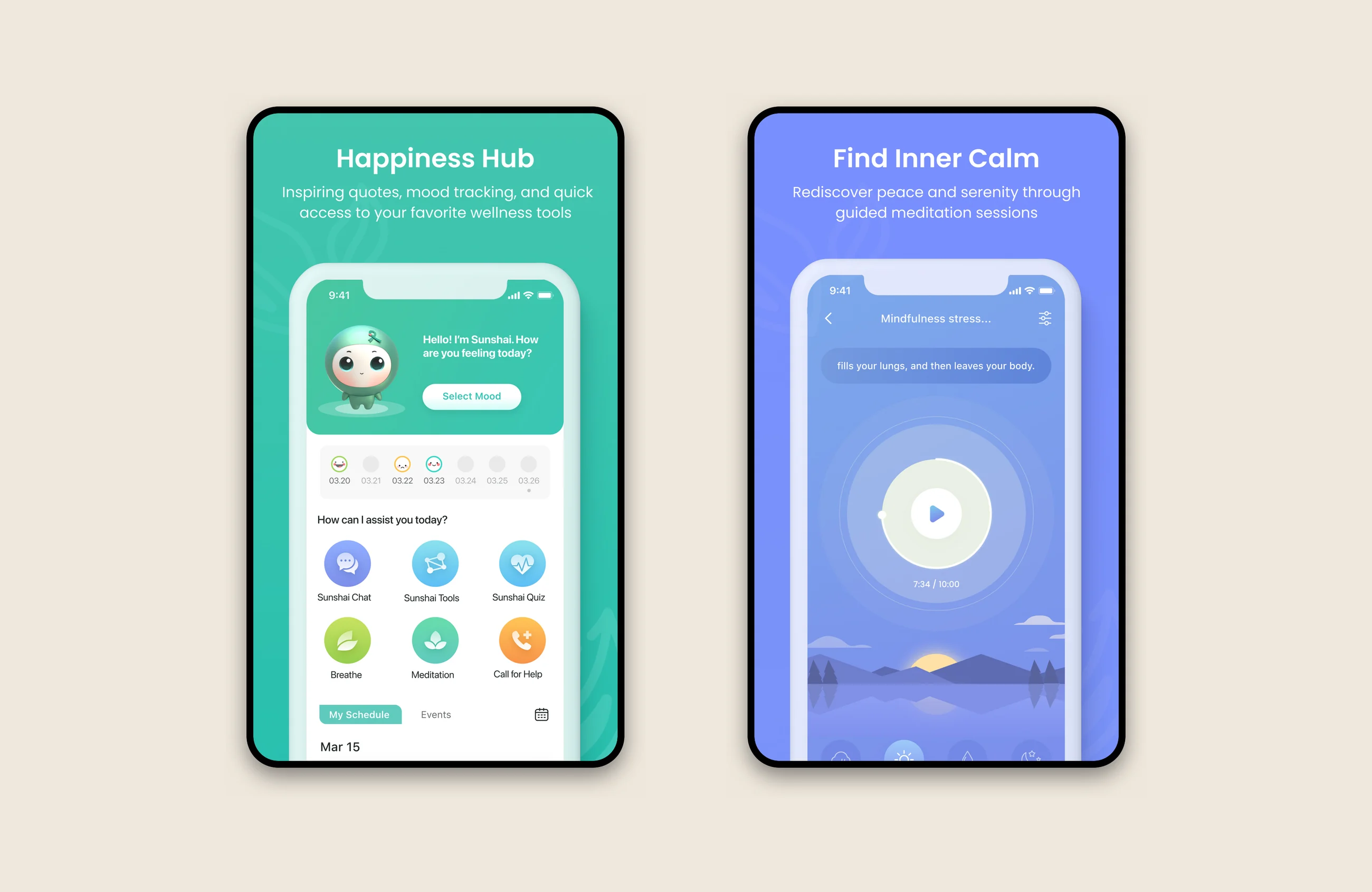
UrSpace and MiSunshine, both live today. These are MHACC's shipped implementations, not my design work. What I claim is the grant editing, the CBT recommendation, and product management on the caregiver app.
Result
I edited the grant proposals behind MHACC's mental health technology program, researched and recommended Cognitive Behavioral Therapy as the clinical modality, designed the CBT delivery flow through clickable wireframes, and ran product management on both the suicide-prevention and caregiver apps. I also presented the program's quarterly progress to Alameda County, the review nonprofits must pass to show grant money is being used as intended. MHACC took a different direction during my engagement. Years later they shipped an AI companion built on the same CBT framework, which is the outcome I point to rather than the decision I got in the room.
Problem
The Chinese-American community in Alameda County has higher rates of mental health under-treatment than the general population, driven by language barriers, cultural stigma, and a clinical workforce that lacks bilingual capacity. Mainstream mental health apps assumed English fluency, Western framing of distress, and individual-therapy modalities that don't map cleanly onto Chinese-American cultural contexts.
MHACC had decades of community trust and clinical knowledge but no in-house product capacity or technology budget. The grant cycle required a complete proposal, prototype, and clinical justification before any funding moved. The solution had to be evidence-based (the county would not fund unvalidated approaches) and culturally legible (the community would not adopt anything that read as imported Western therapy).
My Role
Grant editing. Edited the proposals that secured Alameda County MHSA funding for the program. The proposals were led by a colleague; my contribution was editorial.
Clinical research and recommendation. Researched evidence-based interventions for suicide reduction in the target population and recommended Cognitive Behavioral Therapy as the highest-evidence modality. MHACC did not adopt it during my engagement. The research became the foundation of the AI companion they built later.
Design. Built the CBT delivery flow as a question-based interaction with explicit cognitive-distortion labeling (overgeneralization, catastrophizing, black-and-white thinking), and produced clickable wireframes for bilingual Chinese-English delivery.
Stakeholder reporting. Presented the program's quarterly progress to Alameda County, the review nonprofits receiving MHSA grants must pass to demonstrate the money is being used as intended. The county was the stakeholder whose sign-off kept the program funded.
Product management on both apps. The PM running both left partway through the engagement and I took over, carrying the suicide-prevention app and the caregiver app to the end.
Scope boundary. The conversational AI chatbot in today's UrSpace product was built after my 57Blocks engagement ended and is not my design work.
Research and Insights
Strategic modality research. Evaluated evidence-based interventions for suicide reduction in the Chinese-American population to identify which therapeutic framework would satisfy both the county's evidence-based funding standard and the community's cultural context. Selected CBT based on its evidence base and adaptability to a question-and-response digital delivery format.
Cultural-fit constraints. Worked with MHACC leadership to identify cultural framing requirements. Some assumptions about cultural framing came from MHACC leadership rather than from the target users themselves, which is a limitation I'd address differently (see Reflection).
Solution and Process
The delivery flow was question-based, naming cognitive distortions explicitly so a user could recognize the pattern in their own thinking rather than only the feeling. It shipped bilingual in Chinese and English, which addressed the language barrier directly rather than through translation added later.
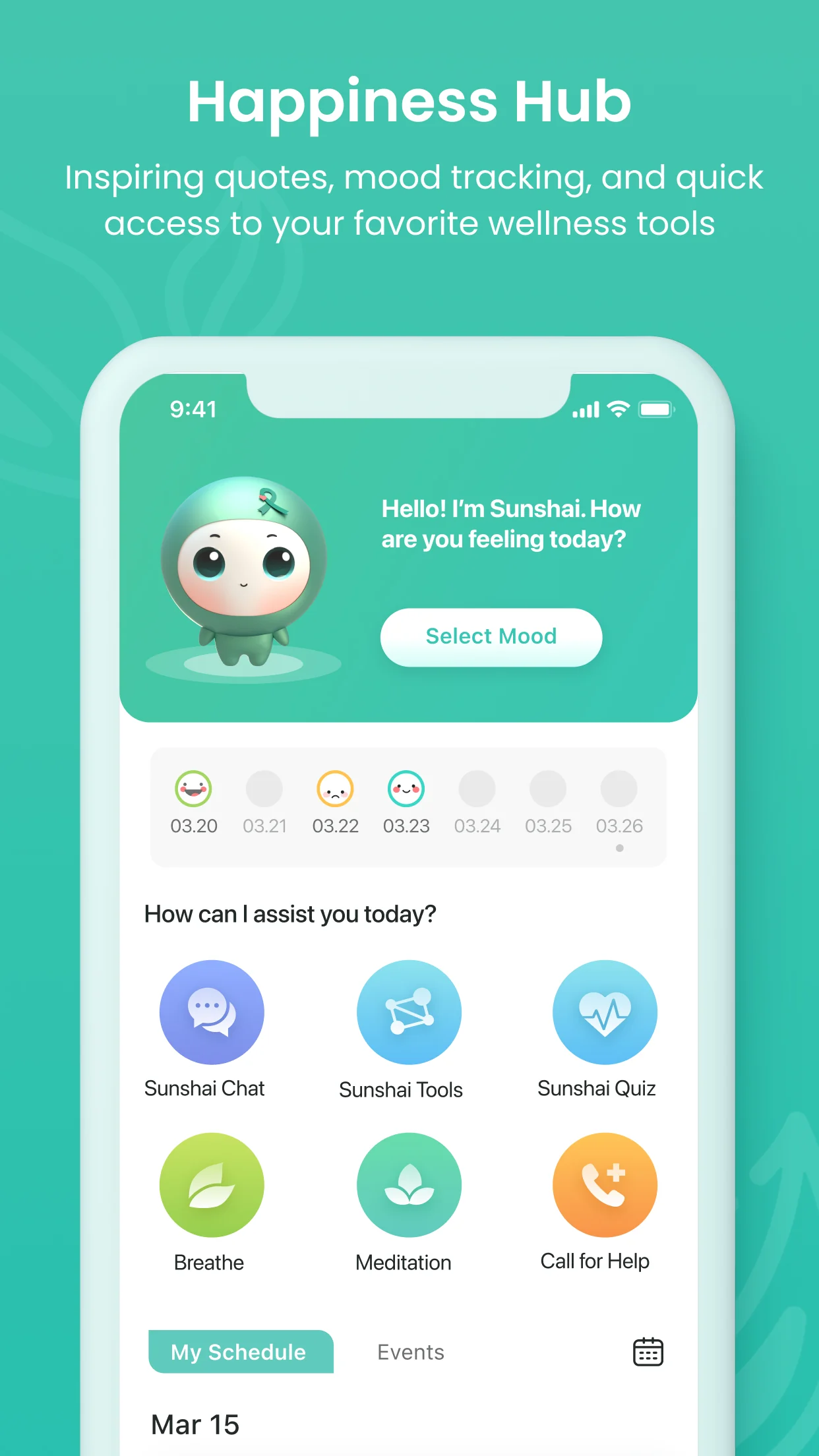
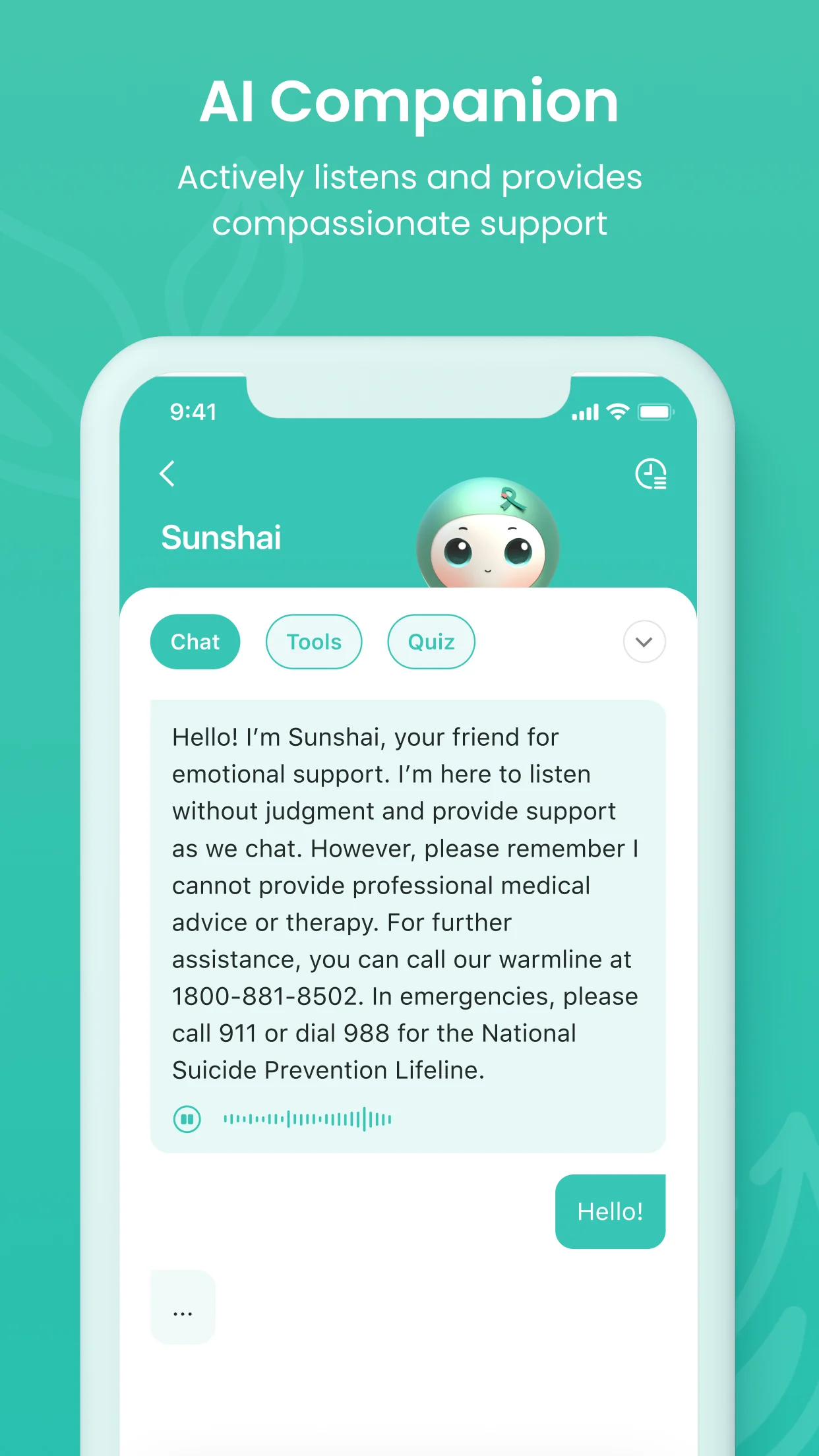
UrSpace today makes the opposite trade, conversational and lighter on labeling. That is MHACC's own product decision, made after my engagement ended.
The expansion to the Caregiver Support App applied the same modality to a related population, extending reach without a new clinical framework.
Impact and Metrics
The proposals I edited secured MHSA funding under Alameda County Procurement Contract No. 19477. The program is still funded. The county approved a Fourth Amendment in October 2025 extending the term through June 30, 2027 and raising MHACC's allocation to $771,185, which makes this an eight-year run from a proposal I helped write.
MHACC did not act on the CBT direction while I was there. Years after my engagement ended they built their AI companion on that framework, which is better evidence the direction was sound than an approval would have been.
Quarterly county reviews passed, keeping the program in good standing with its funder.
The program expanded to a second app for caregivers, bringing a related population into the same structure.
Reflection
I would user-test the cognitive-distortion-labeling choice with the target population earlier. Naming thought traps directly is therapeutically powerful but can land as confrontational for someone in distress, and MHACC's later conversational approach made the opposite trade. That was a real design question I could have answered with users during the wireframe stage rather than leaving it open.
Start a conversation
Want to work together?
I'm looking for my next product management role. I've led as the only product person, and I've worked inside larger teams, and I'm glad to do either. What matters to me is shipping things that count, with people I can learn from.